Spain has restricted its skies to American warplanes engaged in operations against Iran, as stated by Spain's defense minister Margarita Robles.
Clear Message
"We refuse to permit the use of our military bases for any operations associated with the conflict with Iran," the minister declared, adding that Spain had "communicated this position to the American government from the beginning."
Foreign affairs minister José Manuel Albares stated the aim of the move was to "not do anything that could fuel an intensification in this conflict."
American Reaction
The United States has so far been silent, but President Trump has in the past stated to impose a full trade embargo on Spain over its objection to the conflict.
Firm Position
From the beginning of the war in February, the Spanish Prime Minister Pedro Sánchez has been a prominent voice against of the US and Israeli attacks, calling them "dangerous" and "unlawful."
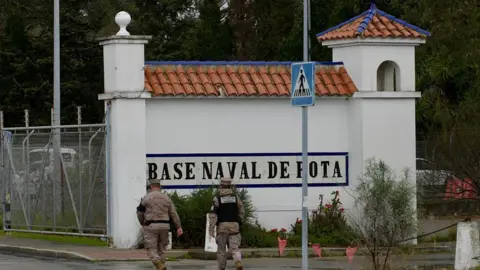
Last month, Sánchez said Spain had refused the US use of the two jointly run military bases at Morón and Rota, located in Andalusia.
"Ours is an independent state that has no desire to participate in unlawful conflicts," Sánchez asserted.
He also announced that "every request that concerned actions connected to the operation in Iran were rejected - without exception, including those of refuelling aircraft."
Operational Impact
Certain American aircraft involved in missions in Iran are based at the Fairford air base in the UK, subsequent to London's approval to a request from the US.
Planes taking off from there will be required to fly around much of the Iberian peninsula - by routing across the eastern Atlantic or through France.
Reports indicate that aircraft would be permitted to enter Spain's skies or touch down at the bases in case of emergency.
Historical Stance
In a speech, the PM Sánchez reflected on wars in Ukraine and Gaza and stated the Spanish government's policy could be encapsulated as "against war."
Later in March, the Iranian embassy in Spain indicated Tehran would be open to appeals from Madrid regarding shipping through the Strait of Hormuz because Spain was "adherent to international law."
Market Effects
Approximately a significant portion of the global crude oil typically travels through the narrow waterway separating Iran and the tip of the Arabia.
In recent times, the threat of attacks by Tehran's military assets has halted traffic, causing crude costs to soar.


